Article
18. desember 2025
How Florø built Norway’s largest and most comprehensive supply base
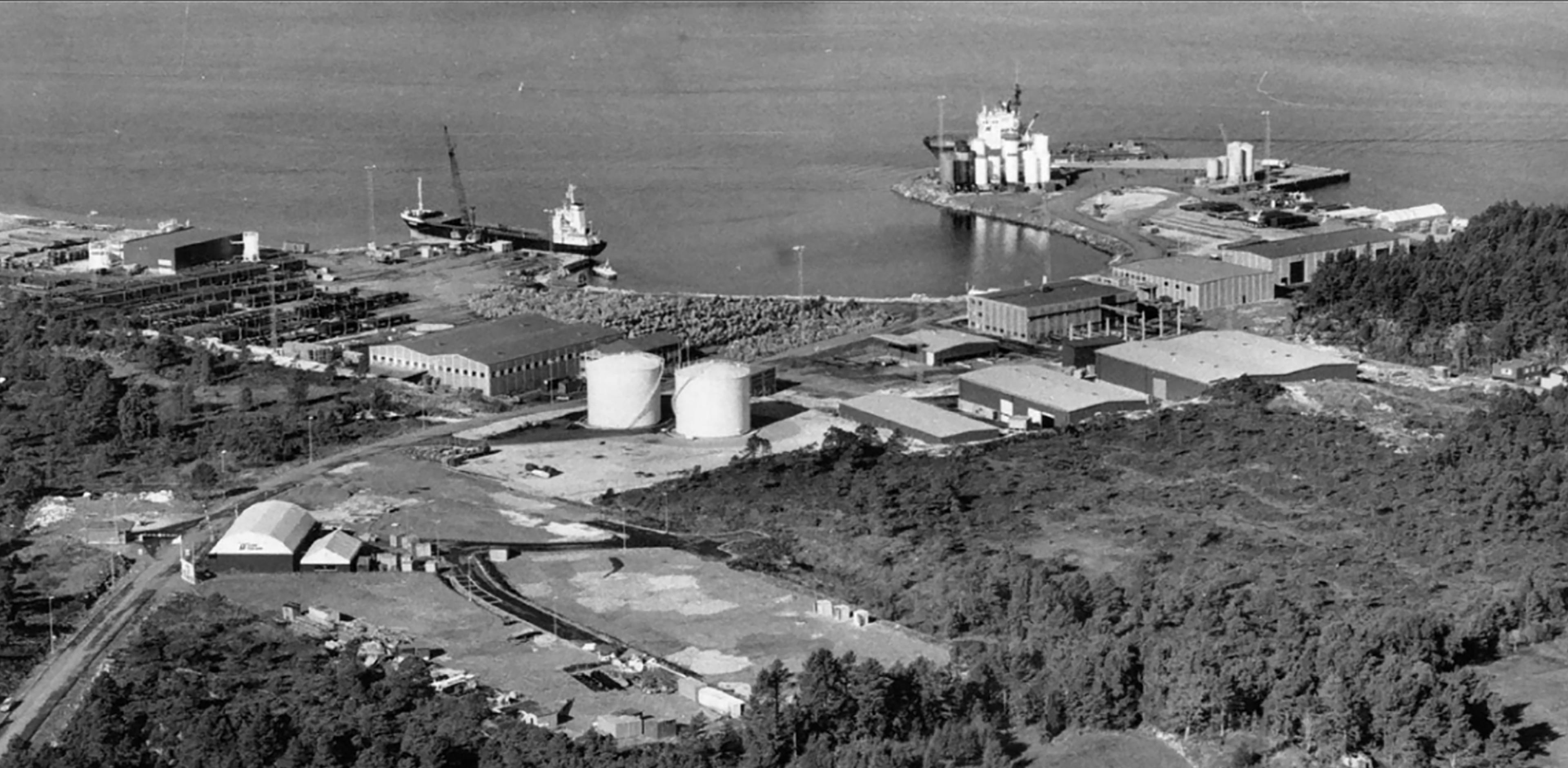
When plans for a large-scale supply base in Florø began to take shape in the late 1970s, many felt the idea was both bold and unrealistic. The town had long traditions in fisheries and shipyard industry, but few imagined that Florø would one day become a powerhouse in the Norwegian oil and gas sector. Still, there were strong local forces who believed in the idea and were willing to take the necessary risks.
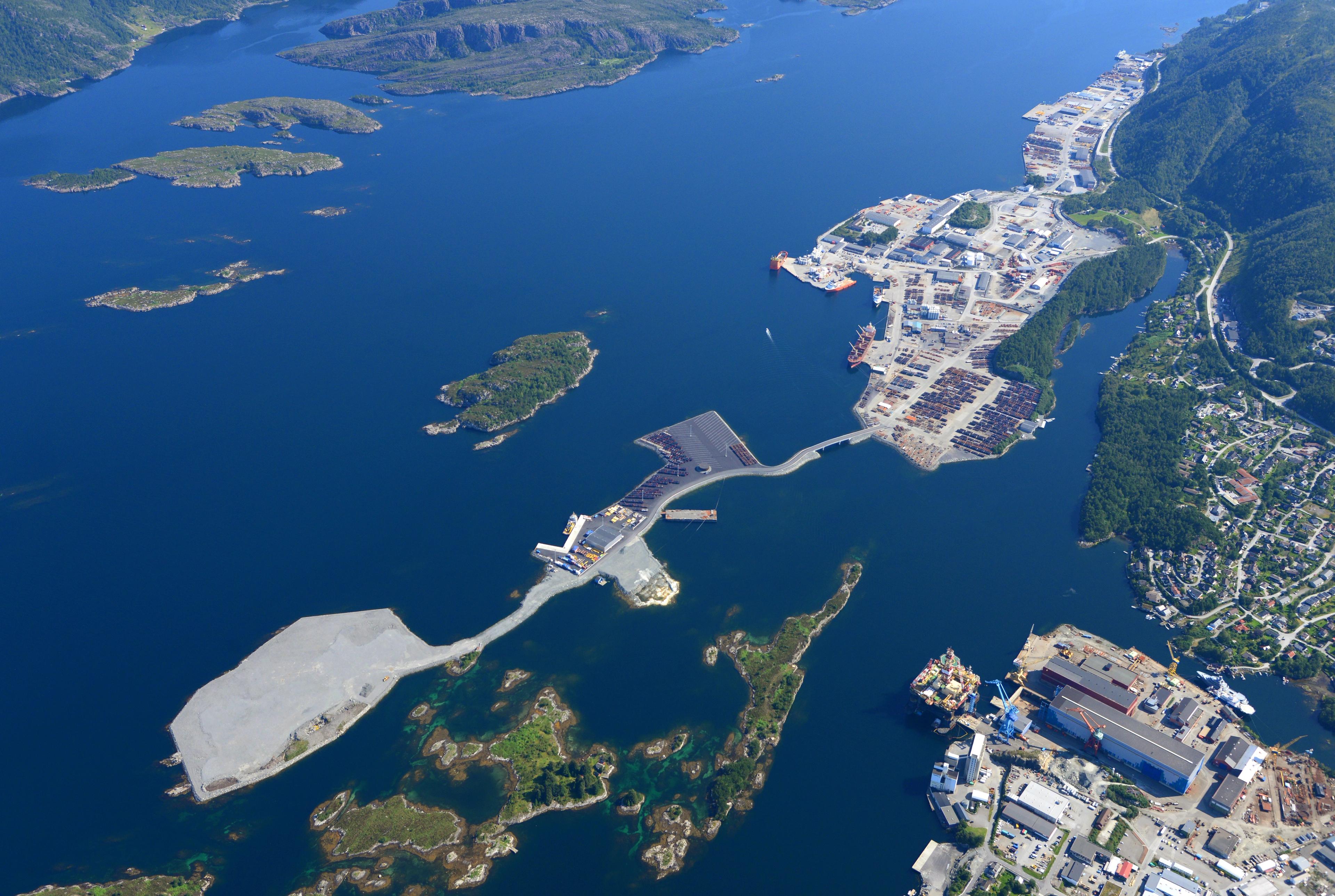
Today, almost 40 years after its opening, Fjord Base stands as Norway’s largest and most comprehensive supply base. It is the result of local will, cooperation, and a strong belief in the opportunities that lay in the sea off Florø.
The humble beginning
In the early 1980s, Florø had gained its first modest experience with oil activity through supplies from Fugleskjærkaia. The facilities were simple, with small base offices, some tanks and bunker fuel, and pipes stacked on the quay. But it was enough to awaken ambitions.
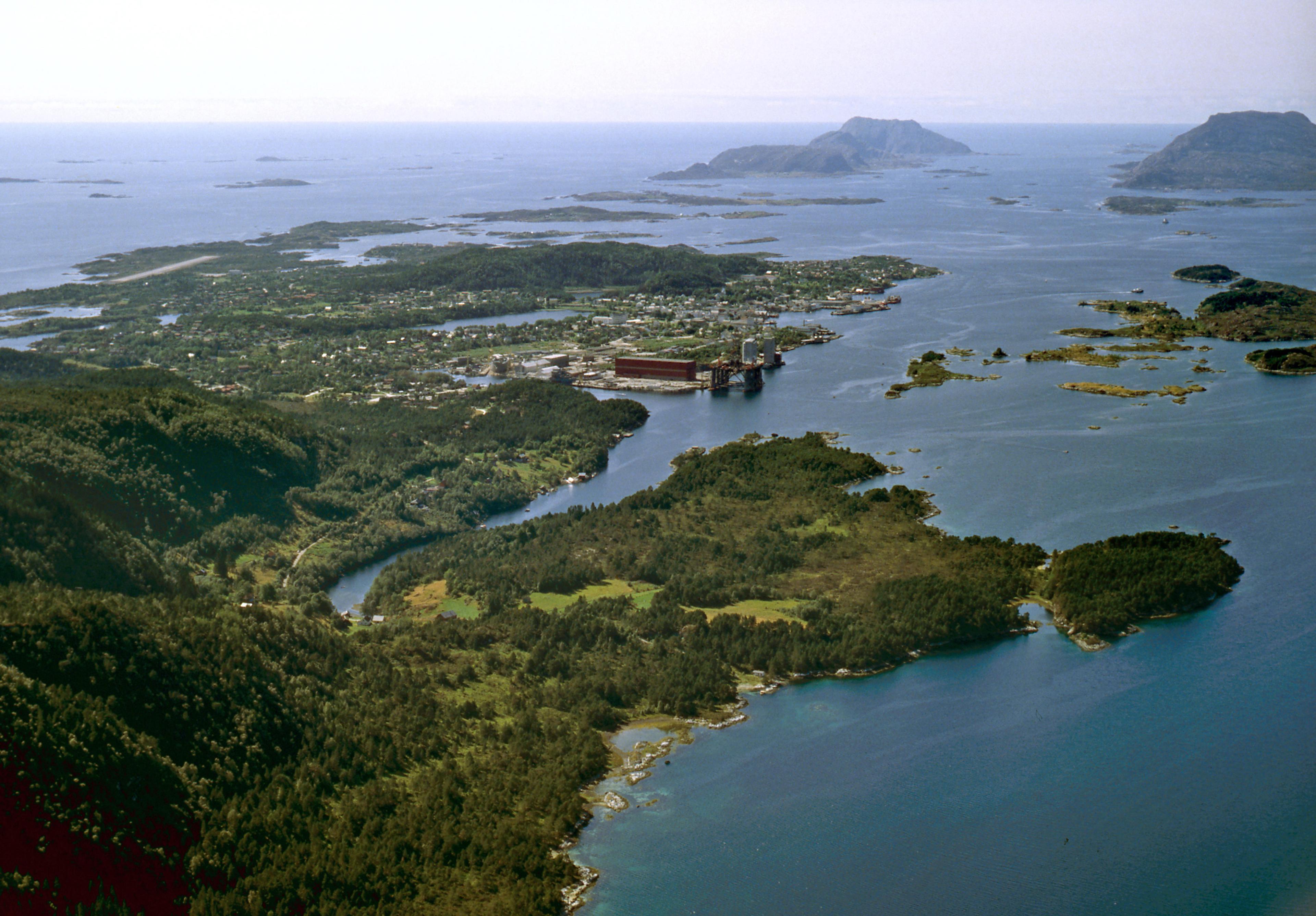
In 1981, mayor Dagfinn Hjertenes took the initiative to set up a steering group to assess a permanent oil base in Florø. The municipality and the county had already designated Botnaneset as an ideal industrial area, and that same year Botnaneset Industriselskap was established to develop the site.
The municipality and the county injected share capital together with Vestlandsbanken and Flora Bremanger Sparebank, and the wheels truly began to turn. Eventually, the oil companies also entered on the ownership side, and the share capital was expanded to 16.2 million.
Entrepreneurs with instinct and drive
In the late 1970s there were two young men in Florø who would have a decisive impact on the town’s industrial development: Oddgeir Igland and Per Nødseth. Both saw the opportunities in the emerging oil industry and wanted to build an industry that could create activity and jobs in Florø.
Oddgeir started West Industri Service, which delivered piping systems to the shipbuilding industry and early on built a solid professional environment that attracted attention far beyond Florø. At the same time, Per returned home from Stavanger, with solid experience from the heart of Norwegian oil development, and established NBN Elektro, which delivered electrical and service work to industry, construction, and infrastructure.
Per and Oddgeir met in the Home Guard and quickly hit it off. They shared ambitions, drive, and a belief that Florø could claim a place in the oil industry. Both were already working with deliveries related to offshore maintenance, which provided valuable experience and an advantage that would prove important.
A name with resonance
As the work to develop Botnaneset as an industrial area progressed, the need emerged to give the new base a clear identity. Botnaneset Industriselskap functioned as a development and property company, but operations and activities were at this stage supported by external players. The goal was to establish a locally owned operating company, and that also required a base name with resonance in the region.
In March 1982, the newspaper Firdaposten announced a naming contest to find a name for Florø’s new venture. The response was overwhelming, with more than 400 proposals submitted, ranging from traditional place names to more creative alternatives.
The criteria were clear: The name should be short and Norwegian, easy to pronounce in English, and have local roots. The winning proposal, Fjord Base, met all the criteria and was submitted by students Roger Ringstad and Jan H. Standal at Krokane school.
“Fjord Base has a good ring to it, both in Norwegian and English,” stated mayor Dagfinn Hjertenes.
He was right. The name has since been a strong and recognizable brand in Norwegian oil history.
INC Invest and the idea that changed everything
In 1984, Per and Oddgeir took a strategic step that had major significance for the development of Fjord Base and the industrial environment in Florø. They established the holding company INC Invest and gathered their own companies under one umbrella, which later became known as INC Gruppen, to target offshore maintenance and industrial deliveries.
They invited other companies in that could strengthen and complement the range of services. In this way, they gradually built up a broad and powerful industrial cluster at Fjord Base, where several businesses together could deliver a more complete package to the oil and gas sector.
In the early 1980s, operator companies often had to deal with many individual suppliers to have their needs met. Oddgeir and Per understood early on that Florø had to think differently to compete with established bases.
They saw that a more holistic and integrated offering would be an important competitive advantage. Although other bases also developed complete services over time, Fjord Base was early in actively and purposefully using this thinking in its strategy.
“We received early advice from Harald Ynnesdal that if we were to compete with the established bases, we had to make things simpler, faster and more holistic for customers. That is where the idea of gathering everything under one umbrella was born,” explain Oddgeir and Per.
This principle is known today as the “one-stop shop” model. For Fjord Base, it became a key factor in building competitiveness and a foundation for the base’s further development.
The opening in 1985: A milestone for Florø
After several years of planning, political work, and local mobilization, the time had finally come. On 21 August 1985, Fjord Base was officially opened—a day that still stands out clearly in the memory of those who were present.
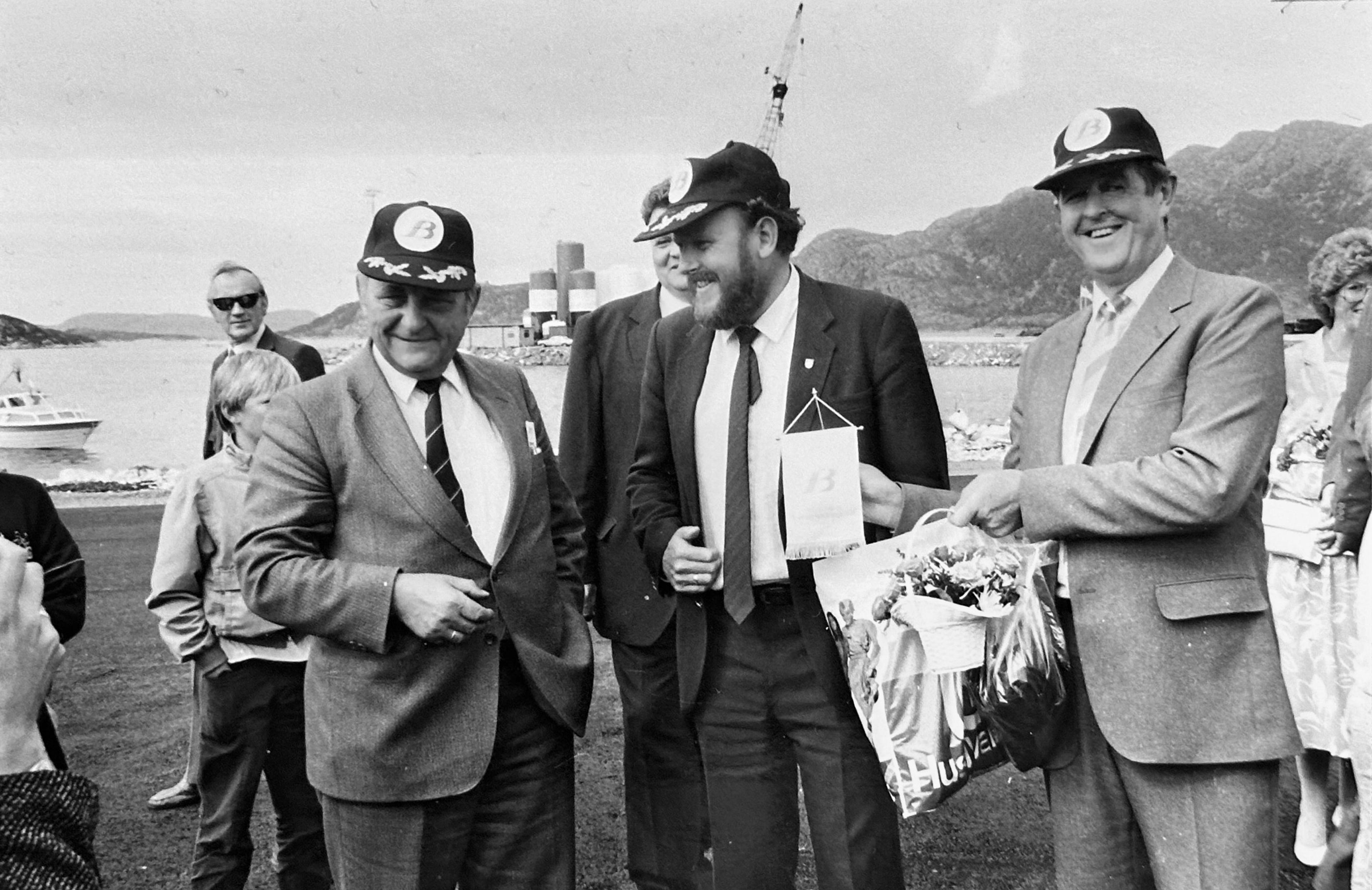
Minister Arne Rettedal arrived by helicopter, which landed in the middle of the base area, a rare sight in Florø at the time. But what really entered the history books was mayor Dagfinn Hjertenes’ famous “oil leap”. Dressed in his finest clothes, he jumped from the quay straight into the sea. It became a symbol of courage, humor, and indomitable optimism.
Rettedal highlighted the local effort in his opening speech:
“The base has not come by itself. You do not get anything without doing something yourself. What has been done here by the municipality, the county, and individuals has led to results.”
The opening not only marked the start of operational activity. It symbolized a clear turning point for Florø, from a town of fisheries and shipyards to a powerhouse for supplying oil and gas fields in the northern parts of the North Sea. From day one, Fjord Base became an important hub for the industry.
Fjord Base as it was established
When plans for a large supply base began to take shape, several external players quickly showed interest in operating the new base. For Botnaneset Industriselskap, however, it was crucial that operations had solid and preferably local ownership. In November 1985, the board therefore decided to give the responsibility to a consortium of locally dominated companies: INC Invest, Ankerløkken, Florø Kran og Bilservice, and Aker Norsco.
In December 1985, Fjord Base AS was formally established by the consortium. Shortly afterwards, in January 1986, the company took over all rights and obligations from Botnaneset Industriselskap. Florø now had its own operating company—built on local roots, industrial understanding, and strong execution capability. That same year, Ankerløkken went bankrupt, and its shares were purchased and distributed among the other owners.
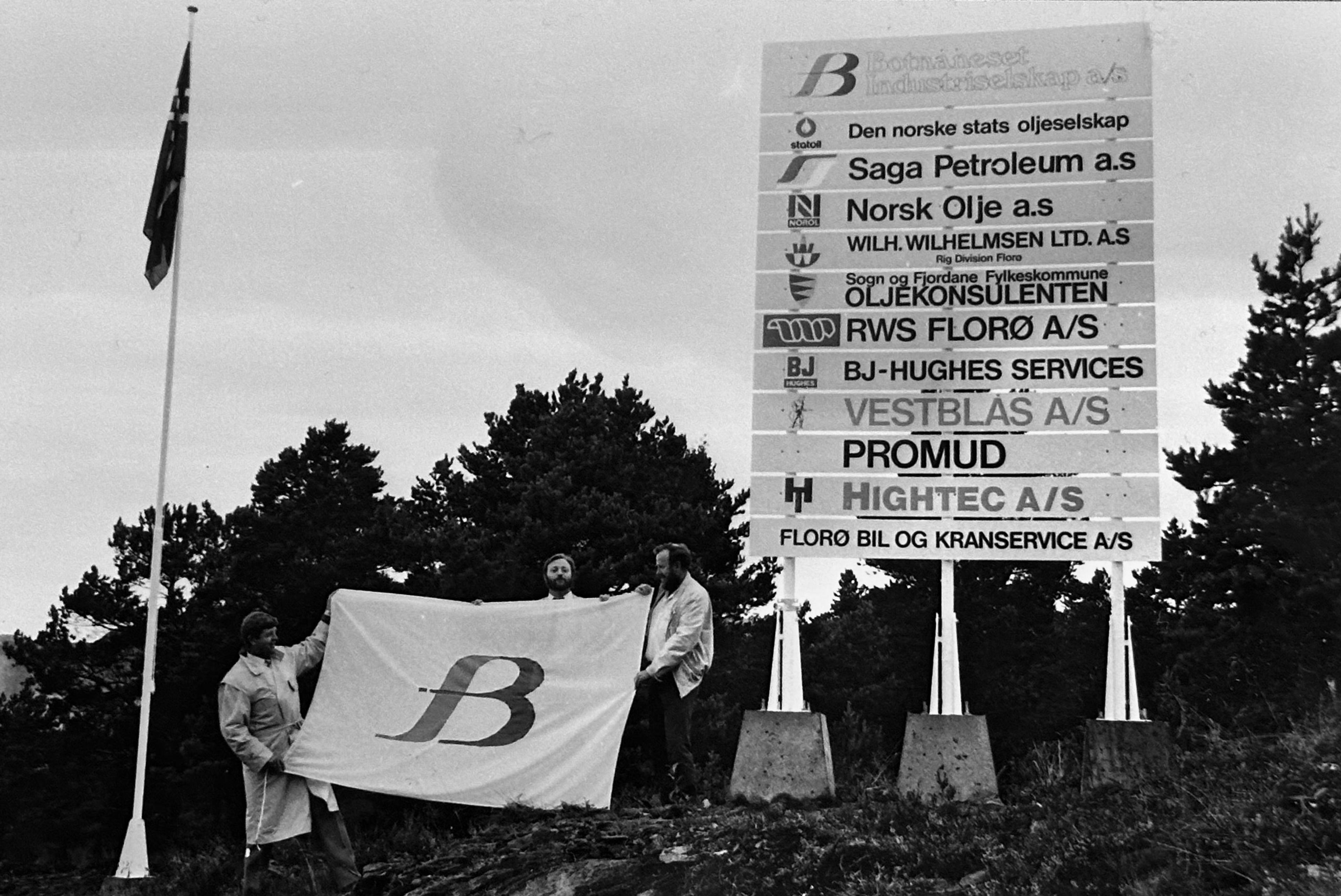
The first employees were Agnar Strømsnes as managing director, Nora Norstrand as secretary, and Einar Nødseth responsible for quay services. With a small but dedicated team, Fjord Base AS began tackling large and complex tasks. There was close dialogue with Statoil at this time, and the company was positive to activity in Florø. Fjord Base was to develop a robust and competitive supplier hub for oil activity west of Florø, in a landscape where bases were already well established both to the south and to the north.
Oddgeir describes the period as follows: “Most of it more or less fell into place. We were young and energetic back then. There was a lot that needed to be sorted, but we had skilled people around us.”
Statoil established a catering service in Florø, and its activity on the Gullfaks field provided important assignments in the early days. Still, it was a major job to build routines, infrastructure, and trust in the market. The first years were intense, but characterized by great enthusiasm and a strong desire to succeed.
“The owners and the board of Fjord Base were very active in day-to-day operations, with varied and substantial experience from the oil industry. This was absolutely crucial for the start-up of Fjord Base AS, and we avoided pitfalls that could have been costly and time-consuming,” says Per.
Pioneering spirit and growth
The first years at Fjord Base were marked by a very special pioneering spirit. There was activity everywhere, and most things had to be built from scratch. New solutions were developed along the way, collaborations were formed across disciplines and companies, and there was a general strong goodwill to see Fjord Base succeed. Resources did not always stretch far enough, but the belief in the opportunities was all the greater.
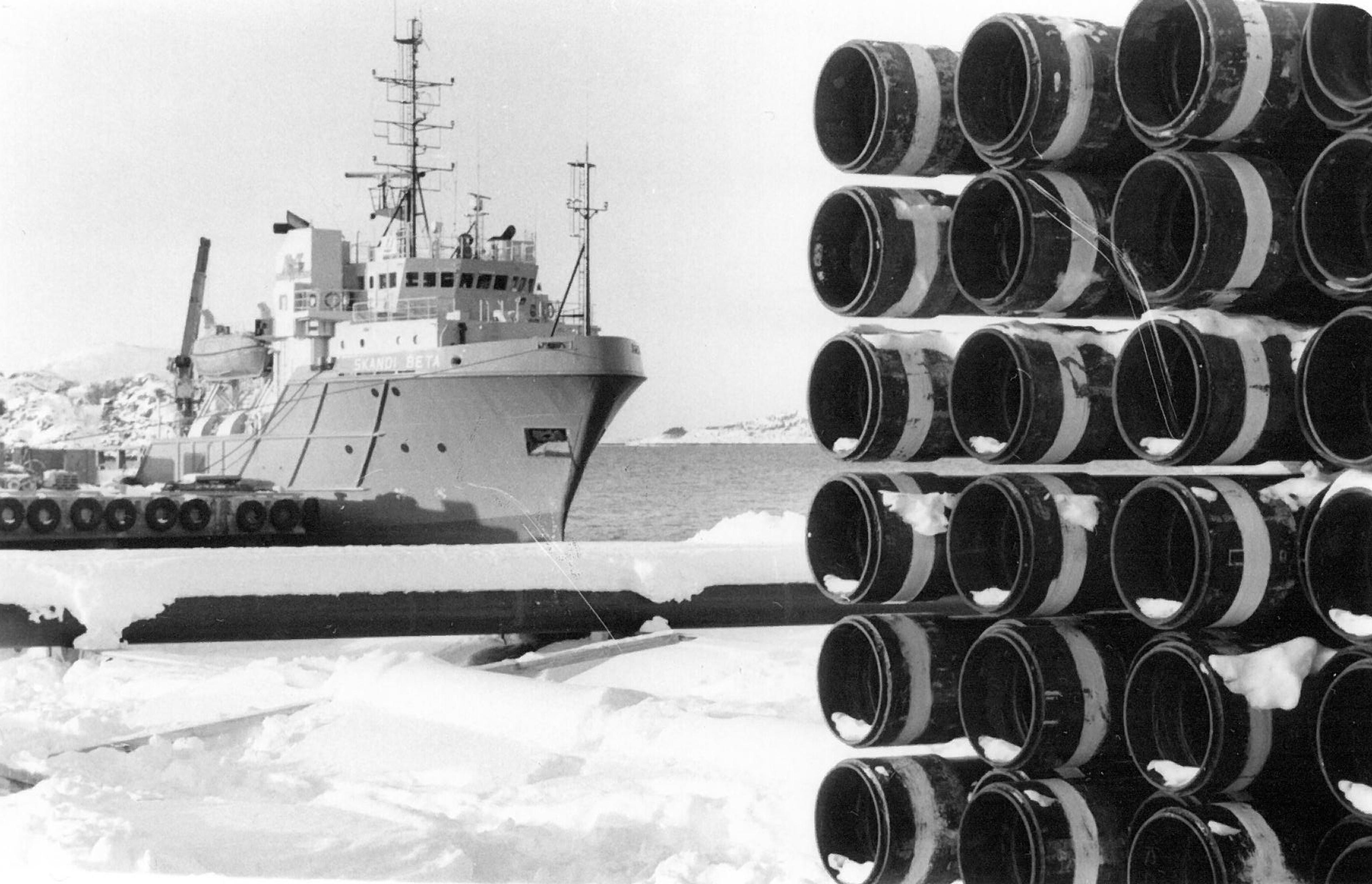
“There was strong will throughout Sogn og Fjordane to make this happen. Politicians, professional communities and several large companies pulled in the same direction. Harald Ynnesdal and Jakob Bleie contributed greatly to helping small companies succeed,” Per recalls.
Fjord Base quickly became a symbol of belief in the future in Florø. The town, which had long relied on fisheries and shipyard traditions, within a few years entered a new era as a modern industrial community. Jobs increased, industrial expertise grew, and new companies were established in the wake of the oil activity.
Since the beginning, Fjord Base has supplied a number of major oil and gas fields in the northern parts of the North Sea and the Norwegian Sea, including Snorre, Visund, Nova, Gjøa, Vega, Gullfaks, Statfjord, Tordis and Veslefrikk. Several of these fields are still supplied today. The stable level of activity has been crucial for the development of Florø as an industrial town and for the emergence of a broad and robust supplier environment.
Today, around 65 companies are established in the base area, from small specialized businesses to larger industrial players. Together they form a complete and highly competent industrial environment that few other places in the country can match.
Milestones and development
The establishment of Fjord Base AS was the first major milestone for Per and Oddgeir. With a locally owned operating company in place, Florø had the structure needed to develop the base further and compete for larger assignments in the offshore market.
In the years that followed, activity grew rapidly, and by 1987 about one hundred people had their daily workplace at the base. Fjord Base received significant national attention and was several times described as “Norway’s finest oil base”.
Statoil moved pipe activity from Rotterdam to Florø, creating significant traffic with large volumes. This made it necessary to expand infrastructure and areas further, to equip Fjord Base for large-scale pipe handling and strengthen its competitiveness. Later, Statoil moved more pipe activity to Florø, and this became the start of the “European harbour” for pipes at Fjord Base. Today, about 50 percent of the employees work with pipe handling, and around half of the area is dedicated to pipes.
At the same time, the operator company Saga Petroleum was well underway with preparations for developing the Snorre field. This too increased the need for area, services, and capacity. The culmination came on 27 May 1988, when the Norwegian parliament decided that the operations organization for the Snorre field would be placed in Stavanger and Florø. For Florø, this was a historic breakthrough and a clear signal of a lasting role in the Norwegian oil industry.
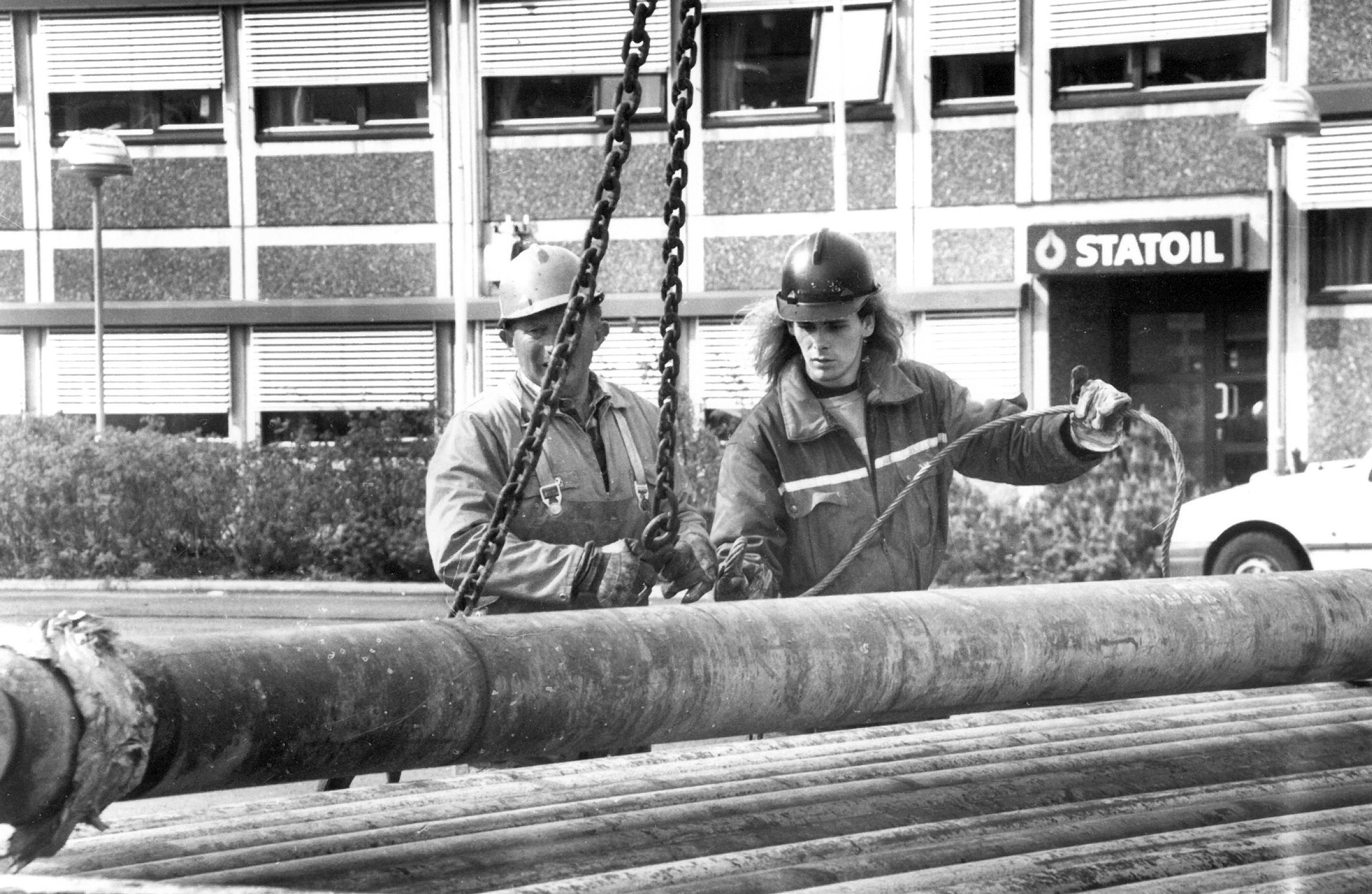
Fact box: The Snorre field was one of the truly large discoveries on the Norwegian continental shelf and has been highly significant both nationally and for the Florø community. The field, which lies on Tampen about 150 kilometers west of Florø, was discovered in 1979 and developed in the late 1980s. When production started in 1992, Snorre A—the world’s largest concrete platform—stood as a monument to Norwegian offshore technology.
The growing activity led Fjord Base AS to build a new administration building, which was completed in autumn 1991. Saga Petroleum signed a 20-year lease for half the building, giving the company long-term stability. In 1990, INC Invest bought Aker’s shares and, a few years later, the shares of Florø Kran og Bilservice, and in practice became the sole owner of Fjord Base AS.
Throughout the 1990s and into the 2000s, development continued. More companies established themselves at the base, infrastructure was improved, and capacity increased. Fjord Base became an increasingly important hub for operators and suppliers and a central driving force for industrial development in Florø and the region.
“That the operations of Snorre were placed in Florø and Stavanger was absolutely decisive for operations at the base in Florø,” say Per and Oddgeir.
In 2008, Fjord Base AS decided to expand the base area with over 60 decares of new land. The area would accommodate the new central pipe warehouse for Statoil in connection with the relocation of the pipe storage from Mongstad to Fjord Base.
Important choices and a new direction
1999 became a dramatic and challenging year for the Norwegian oil industry, and for Florø. The oil price fell to levels not seen for several decades, around 10–12 dollars per barrel. Saga Petroleum, one of the pillars of activity at Fjord Base, was severely affected. There was great uncertainty for nearly one hundred employees connected to the company’s activities in Florø.
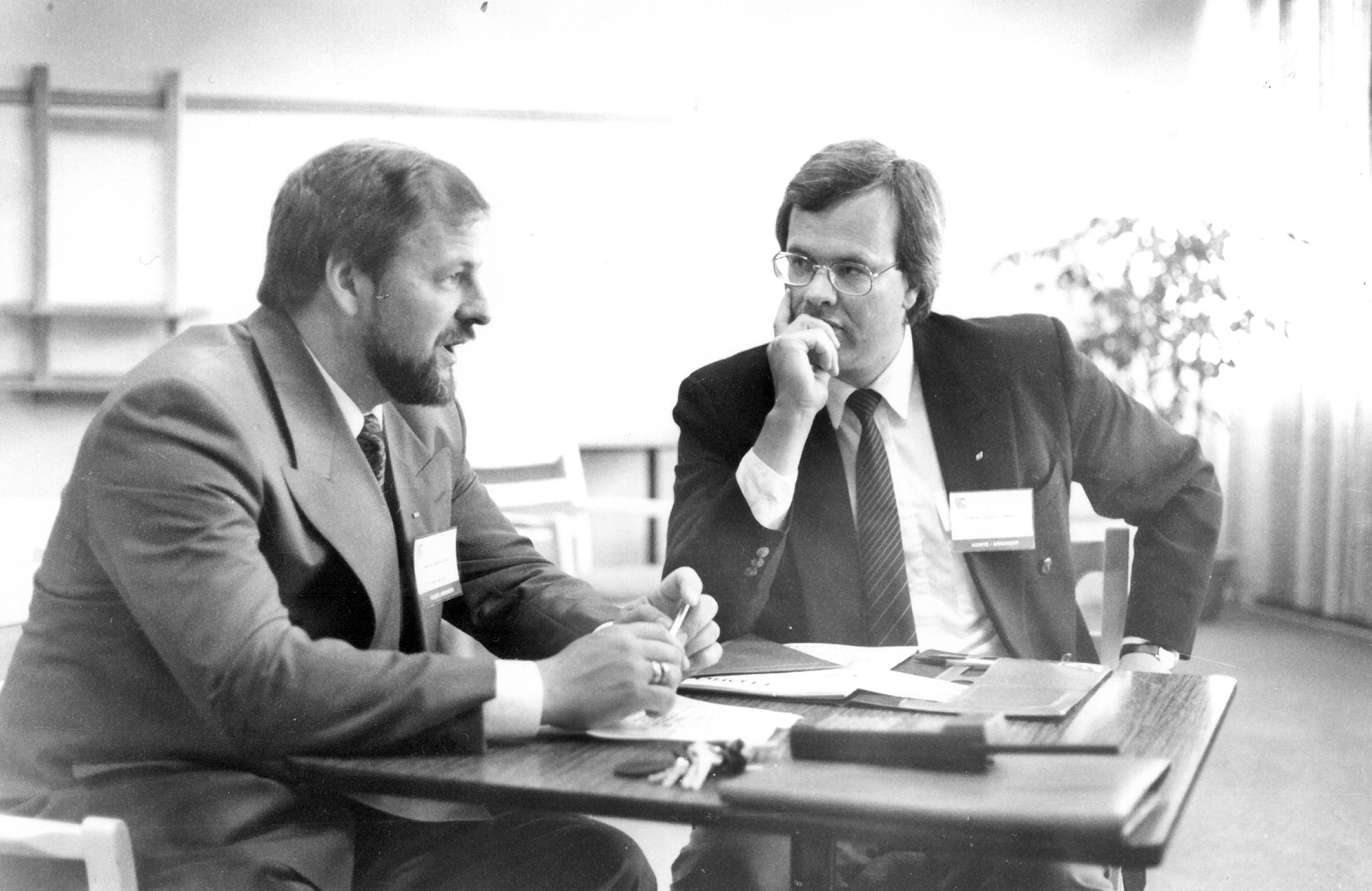
When Saga Petroleum was eventually acquired, much was at stake. Activity could disappear from Florø and important jobs could be lost. In this demanding situation, a decisive and bold choice was made. Saga Fjordbase AS was established on 1 January 2000, owned 50/50 by INC Invest and the employees in Saga Petroleum’s logistics unit, with Per and Oddgeir as driving forces through INC Invest. This was not only a solution to an acute situation, but also a strategic move to secure the base’s long-term development. Saga Fjordbase took over operations of the base, while Fjord Base AS gradually evolved into a property and development company. This model provided strength and flexibility, and it still underpins operations today.
“The establishment of Saga Fjordbase was an important milestone for us,” says Oddgeir. “We got our own operating company that could further develop the base, while Fjord Base AS became a more focused property company. That gave us a solid foundation in a turbulent time.”
A few years later, several of the employees wanted to sell their ownership stake, and INC Invest bought the shares.
The uncertainty in 1999 and the early 2000s made it clear that the industry needed a broader industrial foundation to reduce vulnerability to cycles in oil and gas. Forecasts for further oil activity showed a downward trend. This resulted in the establishment of Havlandet in 2000, a pioneering initiative in land-based cod farming. Halvard Hovland was central from the start, responsible for both operations and biology. In recent years, Havlandet has established itself as a strong player with a completely unique broodstock in cod farming.
A demanding time and restructuring
2015 became one of the most challenging years for the Norwegian oil sector since the early 2000s. After several years of high oil prices, the market dropped abruptly in autumn 2014. The oil price plunged to between 40 and 60 dollars per barrel. Many projects became unprofitable and activity declined across the supplier industry.
The large offshore shipping companies and maintenance firms were hit particularly hard. The effect also reached Fjord Base, where several major contracts in the sector were put on hold. Equinor also awarded three new contracts related to its activity at Fjord Base. Fjord Base AS won one of the contracts, while Saga Fjordbase AS lost two to competitor NorSea.
“Of course, this was an unfortunate situation that we would have liked to avoid, and it also affected several of our employees. A transfer of undertakings was carried out with the aim that all employees would continue in work, but wearing new overalls. It was, in many ways, a kick in the backside that we learned from,” says Per.
After a difficult period for the Norwegian oil industry, activity gradually returned. Per and Oddgeir made strategic and important decisions and emerged stronger from a troubled year. More about that later.
Local value creation
Ever since the first plans for Fjord Base were drawn up, Per and Oddgeir have had one fundamental goal: The base should create jobs and activity in Florø. They knew that work is the very foundation of growth and development in a local community. Already in the late 1980s, more than one hundred people had their workplace at the base, a considerable number in a small town like Florø.
Today the development is hard to fathom. Over 650 people have their daily workplace at Fjord Base, which means that the base employs about one in nine workers in the entire Kinn municipality. In addition, activity at the base creates many jobs and ripple effects outside the gates.
Local value creation—the sum of wages paid locally, goods and services purchased in the region, and taxes and fees accruing to the municipality—amounts to around 1.7 billion kroner annually. Figures like this give a clear indication of what Fjord Base actually means for Florø.
“Over 650 jobs and around 1.7 billion in local value creation every year. That is not just numbers; it is Florø’s future,” says Oddgeir.
At the same time, jobs alone are not enough. If Florø is to be an attractive place for skilled workers to settle, it is crucial to have a vibrant local environment—both for young and old. That is why Fjord Base has, ever since 1985, been an active supporter of culture, sports, and volunteer work. One of the very first cooperation agreements was with Kinnaspelet, entered into the same year the base opened. That collaboration is still thriving almost 40 years later.
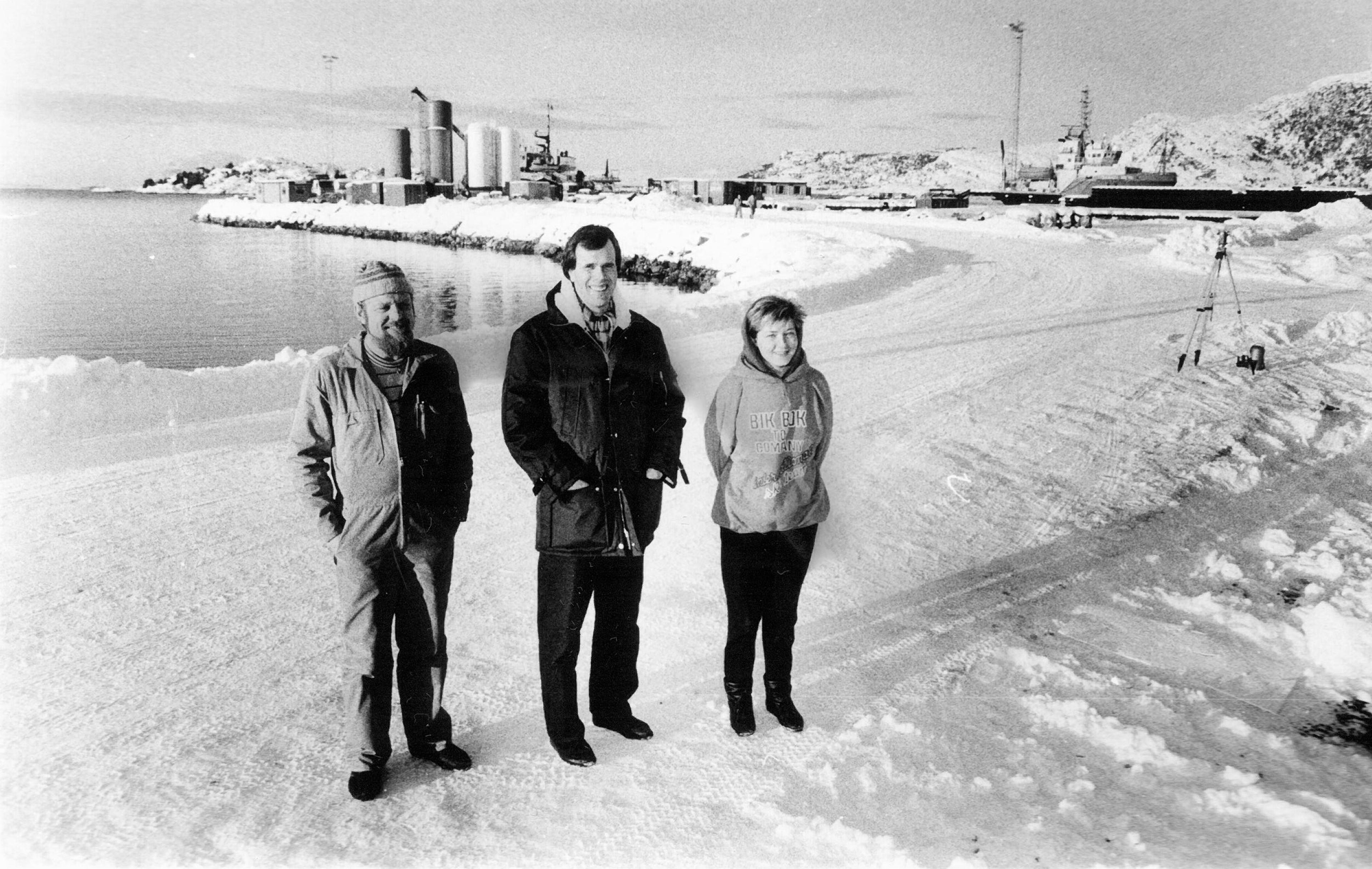
“We have always considered it natural to support clubs, associations, and volunteer work,” say Per and Oddgeir. “Culture and activity mean a lot for quality of life, and it is important for both employees and families.”
Since then, Fjord Base has contributed to a wide range of sports clubs, bands, athletics events, festivals, and various local initiatives. Together with good schools, kindergartens, nature, and outdoor recreation, this has helped create an environment that attracts people and makes them want to stay.
Investing in tough times
2015 was a challenging year when many businesses put projects on hold and investment appetite fell. In the midst of this difficult period for the Norwegian oil industry, Oddgeir and Per chose to do the opposite: They decided to invest.
In December of the same year, they presented plans for a major expansion of Fjord Base towards the west. The expansion covered over 150 decares on Perholmen and Gaddholmen, linked by a new access bridge. Construction began in earnest in autumn 2016.
To many, the timing might have seemed surprising, but for Per and Oddgeir the logic was clear: If the company is to be competitive when the market turns, the infrastructure must be in place in advance.
“It is in bad times that we really have to invest. When the market comes back, we must be ready and in position,” says Per.
The western expansion opened up new areas, larger storage capacity, better logistics flows, and the opportunity to attract new customers and new types of industry. This enabled Fjord Base to grow even though the market was otherwise in a downturn.
There was dialogue with several potential customers who showed interest in establishing themselves in Florø, and requests for areas for new future activities were expressed. The westward expansion was not just a construction project, but a clear strategic statement: Fjord Base would not wait for better times—it would develop through difficult times.
Not just oil and gas
Although oil and gas activity is still the most important driving force at Fjord Base, Oddgeir and Per have always seen the need to build a broader industrial foundation. History has shown that markets fluctuate and that long-term robustness requires new pillars to stand on. In recent years, therefore, Fjord Base Gruppen has taken several strategic steps to position itself for the green transition.
Forecasts for the Norwegian continental shelf show a gradual decline in production towards 2034, from today’s level of around 4.2 million barrels of oil equivalent per day to about 2.4 million. Even though such forecasts have previously proved uncertain, they still serve as a reminder that the industry must evolve.
“We have seen such forecasts before. They rarely materialize exactly, but we still need to plan for it and for the possibility that the market will change,” says Per.
Against this backdrop, Fjord Base Gruppen is now actively working on new and future-oriented initiatives. Through the company HyFuel—a partnership between HYDS, SFE, and Fjord Base Gruppen—a final investment decision has been made for a 20 MW plant for the production of green hydrogen at the base. The project has received 180 million kroner in support from Enova and will be one of the largest industrial hydrogen initiatives in the country.
In parallel, work is underway to establish a bunkering facility for ammonia for shipping, a pioneering project that could become the first of its kind in the world. This will give Fjord Base a completely new role as a supplier of green fuel for maritime transport.
In addition, Fjord Base is strategically located in relation to the proposed offshore wind areas from NVE off the coast. Proximity to the fields, combined with large areas and long experience with advanced logistics, gives the base a significant competitive advantage when the offshore wind industry accelerates in Norway.
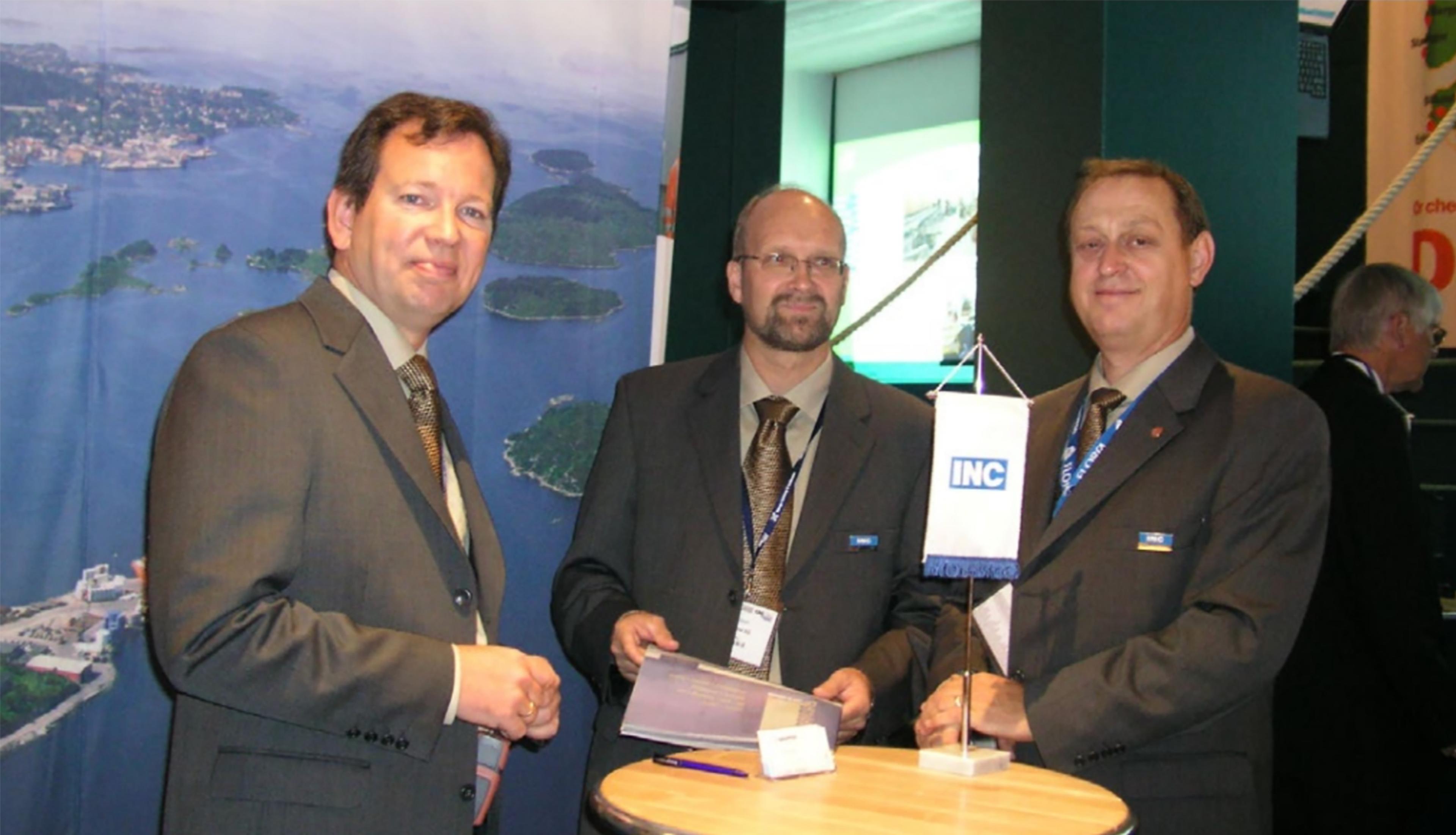
The development shows how Fjord Base is gradually transforming from a pure oil base to a broad energy and industrial base—a base equipped for both today’s needs and tomorrow’s opportunities.
New ventures and an ownership change pointing forward
In 2023, Fjord Base Gruppen took another strategically important step. The British infrastructure fund Ancala Partners became majority owner with 75 percent of the shares. After more than 40 years as an active industrial builder, Oddgeir chose to sell his entire stake in Fjord Base and at the same time took over all shares in Havlandet to invest further in land-based cod farming, a project he has been deeply involved in for a long time.
Per chose to retain a significant ownership stake in the base business and today holds 25 percent through his family company Semi AS. In this way, both continuity and renewal were ensured: Fjord Base Gruppen gains access to new capital, international expertise, and a broad network, while Havlandet can continue to develop as a forward-looking marine enterprise under its new identity “Havland”.
The change of ownership does not mark an ending, but rather the beginning of a new phase. The entrepreneurial spirit of Per and Oddgeir remains strong—just in new forms. They have built what is today Norway’s largest and most complete supply base, and at the same time created enormous ripple effects for the local community in Florø.
That they now move on to new projects is entirely natural. It is in their DNA to build, develop, and drive new initiatives forward. At the same time, Fjord Base is positioned for further growth, new green ventures, and a future where industrial development and energy transition go hand in hand.
“The new ownership situation has proven to be very good. The new owners have shown great trust and given the management of Fjord Base Gruppen the necessary room for maneuver. That bodes well for development going forward,” says Per.
A base built on courage and willingness to take risks
Looking back at the history of Fjord Base, it is easy to think everything came by itself, but that was never the case. What is today Norway’s largest and most complete supply base was created by political will and the drive of two entrepreneurs who not only saw the opportunities but also had the ability to realize them. They weathered upturns and downturns, demanding periods, restructuring, and tough decisions. They took risks when others doubted and invested when the market was standing still.
Over 40 years they have shown what local ownership, industrial courage, and cooperation can create. Florø has much to thank Oddgeir Igland and Per Nødseth for.
“I am optimistic about Fjord Base’s future. As Norway’s largest, finest, and most efficient supply base, which also owns its own area, Fjord Base is a flexible and forward-leaning player that creates opportunities for its customers,” says Oddgeir.
Today, Fjord Base is set up for further growth with new initiatives such as hydrogen, ammonia, and offshore wind. The development of areas like Naustholmen creates space for new industries to emerge, and the entire base is stronger than ever. The foundation is solid, laid by the hands and knowledge of those who were there from the beginning.